Living in Zurich
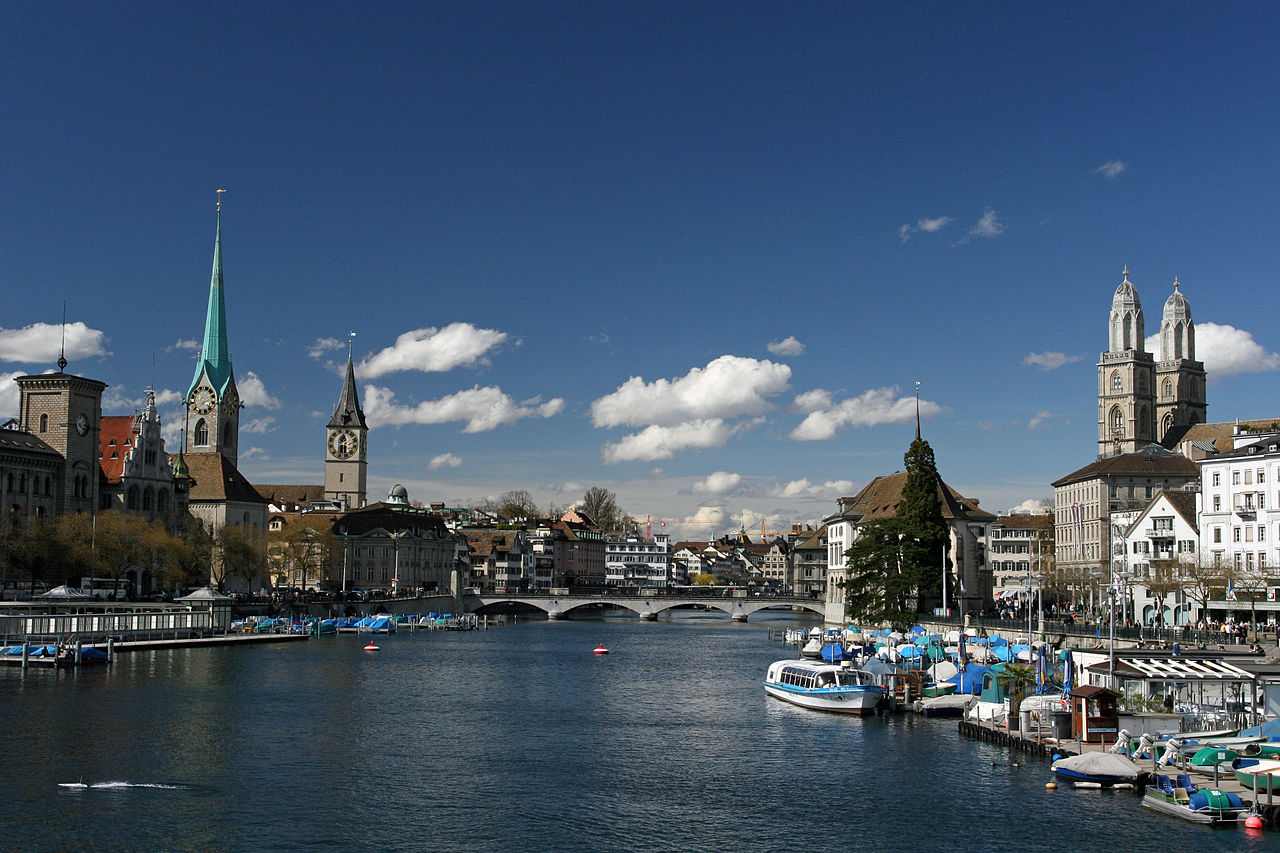
While I have lived in many places over the globe, there isn’t many parallels I can draw to Zurich simply because they are all so different.
The good
It is clean, efficient, and uniform. The mountainous air breathes fresh, the Limmat river is green and on a good day almost transparent, and there is no litter on the street save for some cigarette butts.
Swiss people must live on a higher moral plane, there are indications everywhere suggesting that they are willing to pay more for better, and thereby passing referendums after referendums demanding better and stricter social and environmental regulatory laws. Using the example of garbage collection; the waste is divided into five categories, garbage, organic, paper recyclables, plastics, and glass. Each has its own method, time and place of being collected. Garbage requires special bags called Zuri-sac, purchasable in stores (not cheap), and placed in specially marked garbage bins allocated to each building. Organics – haven’t figured this out yet but also special bags and green bins. Paper and cardboard needs to be properly secured with string and placed next to the Zuri-sac bins. Plastics must be brought to stores. Glass is further separated by colour into brown, green, and clear at the refuse, also distributed through out the city. Special disposables such as electronics, christmas trees, and furniture are collected at certain dates given in a yearly calendar, or -apparently- along a tram line with a specialized tram.
What if you make a mistake… 1) it won’t be collected, but that’s pretty obvious. 2) they will look through the garbage and post a fine if your address is somehow found… That seems a bit extreme to me, and so far hasn’t happened yet…
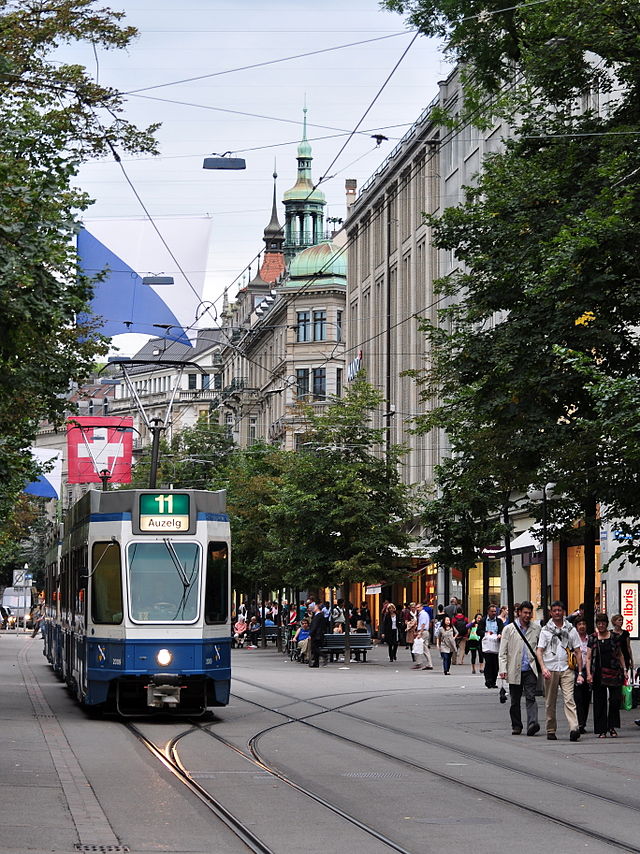
Apply this level of organization to everything, and you have trams that always arrive on the minute, stores open exactly at the specified time, all foods have a uniformly laid-out ingredients and nutrient list, and so on.
The not so good, but not that bad either
Geographically, Zurich is in the middle of western europe, and one can reach most of the countries there in a few hours by train. It is mountainous, the city is basically built on hills with not a flat road to be found. It makes biking a lot more difficult than in the Netherlands. I don’t know if that’s a plus but it is certainly very different to be able to go to a mountain top with a 20 minute tram ride.
It is the general opinion that the city itself is not as worth while as the countryside around it. That’s not much of a statement because Zurich as a city is kind of drab, and ridiculously expensive. All the attractions can be seen in one day, and are all located around the main train station. Outside that 1 km perimeter, there is nothing but residential low-rises. There are two major supermarkets, Coop and Migros, and they are distributed systematically throughout the city to ensure equal access.
As a matter of fact, everything is systematically [optimized, organized, scheduled]-ed, to a point where everything works ruthlessly efficiently with no signs of sympathy. The people are friendly but not welcoming, rule-abiding to a fault, and sometimes dumb as a bag of doorknobs. To the question “do you speak English?”, the answer is invariably “No.”, leaving both of us (just me usually) awkwardly staring. There is never “no, sorry, let me find someone who can.”
The cost – it is no myth that Zurich is perhaps the most expensive city in the world. This is not helped by the fact that the Swiss Franc’s value just shot up over night. On the same token, the actual Swiss are some of the wealthiest population on average on the planet. So they do not mind paying 6 francs / euros for a frozen pizza (a fresh pizza from a restaurant in Italy is about 8 or 9 euros) or 8 for a cup of hot chocolate from Starbucks. This cost does not seem to be artificially hiked up however, at least not entirely, as everything is either organic, or locally produced, or both. Some even distinguish between Zurich produced, or *merely* made-in-Switzerland. I am not sure but there might have been a referendum that was passed forcing grocers to only source from ethical producers.