A visit to China, a story of constrained renaissance
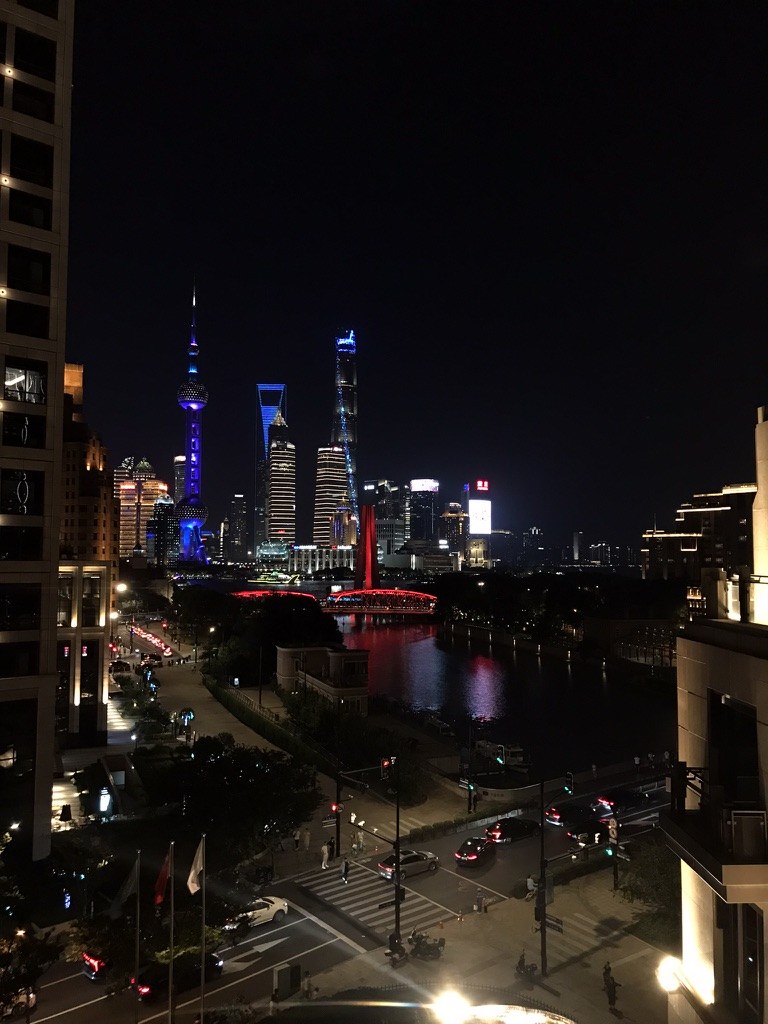
It was supposed to be an experience for me as a former Chinese national to witness China’s transformation. The last time I visited Shanghai was back in 2005. I was 17 at the time. The time before that was my birth back in 1987. My family and I left Shanghai in 2001 when I was 13 and I really don’t remember much of it. This time, I was 36 years old, and I visited China to attend a conference, and I suppose, with slightly more money.
If negativity annoys you, please skip forward to the second part of this post.
China regularly touts its economic development over the last decades and uses Shanghai as a prima facie example. To me though, at least given the limited time I was here (slightly over a week), the city isn’t so different from 20 years ago. It may be because I really don’t remember what it was like 20 years ago so it is hard to compare and contrast. The bits and pieces that got stuck in my memory were the stuff that didn’t change at all. The architecture on the bund and the view across the river, the parks I used to play with my parents. Those didn’t change. I suppose there are several more skyscrapers across the bund river but the pearl tower remains the singular landmark that remains unmoved.
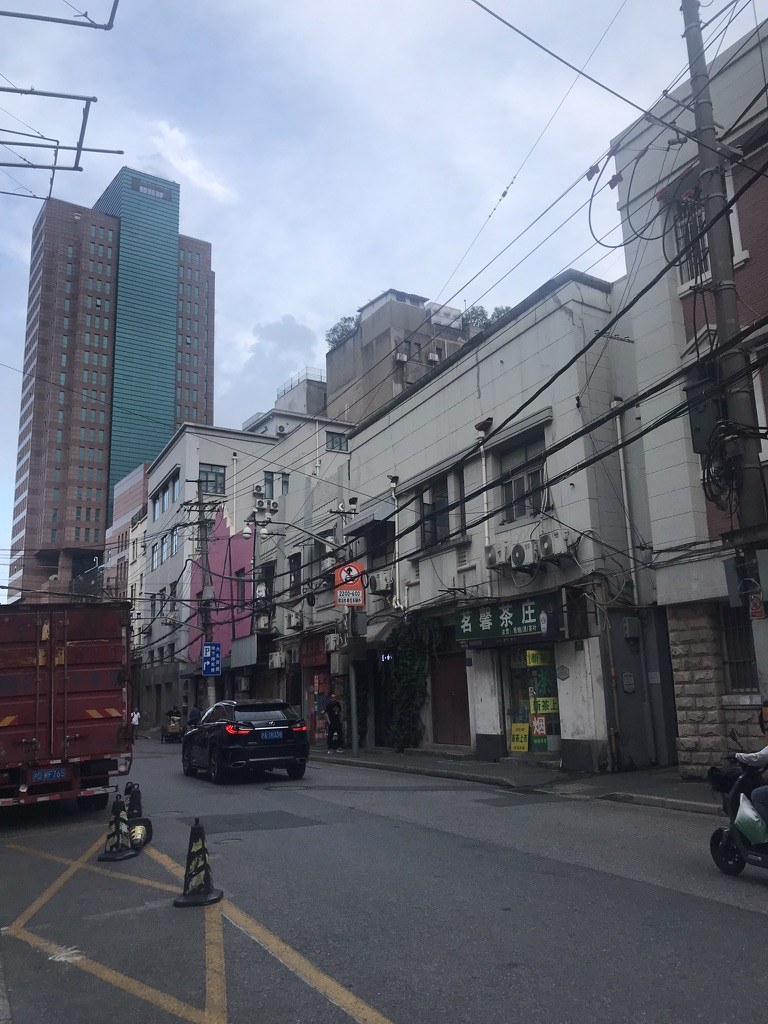
Economic development had been tremendous. But then again, Shanghai had always been an economic powerhouse way before the 1949 liberation. People living in Shanghai were always more well off than the rest of the country. Historians remark that the tolerance for autocracy increases when the people are well off. This is certainly true here, whether for the locals or the Chinese visiting from other cities or foreigners to China. Given this prosperity, the overwhelming obsessions of the masses seem to be shopping and eating.
What remains stagnant is the culture. Post liberation, it seems that the culture stopped evolving. This is most evident when I went to the China Art Museum. Aside from a large temporary exhibit on contemporary art (which I will describe at length later), the art I saw fell into three categories. First, there were many ancient works of calligraphy and watercolor from the various dynasties. Second, paintings by pre-liberation artists who were clearly trained in foreign schools. These refreshing works depicted people’s lives in colonial Shanghai in wonderful details. Lastly, a bunch of the garbage pieces extolling the virtues of the party or fictitious depictions of the revolutionary war. These were produced after the liberation and, are of no artistic value.
There is a lot of copying. The society seems lost and drifting, and it clings onto whatever it could. In the museum, there are literally replicas of Van Gogh, Monet and other European masters; the famous pieces, of course, for people to admire and take photos of.
On the high street, we see Hermes and Gucci, Nike and Shake Shack, occupying way more space than they ought to, funneling billions out of China. On Chinese digital apps and on the streets, a cacophony of nauseating visual imagery bombards one’s senses at every turn with cartoon characters only slightly modified from Japanese productions. And without that fundamental history of the origin, these impulses grow without constraint and metastasize into something grotesque and disturbing.

One can argue, and I agree, that bringing the population out of abject poverty and starvation is fundamentally more important than evolving the culture of the society. At some point however, it becomes no longer an option to separate the two.
Despite the financial security, what remains unchanged are the people. Notably wealthier, their brusque mannerisms, impatient demeanor, loud voices, damp smells, down to how they hack up and spit phlegm, remain the same. I have even seen one guy who took a shit in a dark corner on the bund in the evening while surrounded by thousands of pedestrians.
Perhaps seen as inefficient given the mutually unintelligible nature between mandarin and the Shanghai dialect, the latter had all but disappeared, so much so that I spoke to exactly one person using the dialect after hearing her speaking it to another worker.
I thought alcohol wasn’t a large part of the culture until I checked out the “locals” hangout near the French Concession. Young locals intermingling with expats, drinking and smoking pipes. It is strangely reminiscent of the pre-revolution times… Almost a split image, 75 years later.
On the academic front (my bread and butter), university students are extremely sheltered. They live on campus, eat all their meals in canteens, and are given an allowance from their parents. They are actually given a bank account in the form of a QR code on WeChat whose expense they cannot check. Practically, this worries me when I try to recruit them as grad students. As I discussed in another post, moving to the US is not easy. It takes a lot of self-determination to wade through the gauntlet of seemingly impossible and ridiculously stupid requirements just to settle down and start doing research. The ability to hack things is a skill that Chinese students don’t seem to need.
By-and-large, the students are not taught to think. They are trained for the pressing challenges of today, without giving much thought to the more fundamental and more complex challenges of tomorrow. The brightest kids in the best universities are taught to how to fix cars (literally). Not to say that, that skill isn’t important, but doesn’t it remind us of when Mao made everyone build a iron furnace in their backyard (土法炼钢, literal meaning: primitive steelmaking)? Look how that turned out.
Research funding is an interesting thing. It kind of evolved from the US system. There is a NSF type mechanism, though their funding is limited. Receiving such funding is more an approval of one’s technical ability (to write good proposals I suppose) than any monetary gain. In all funding, student salary is not a part of the budget. Industries funded a majority of the projects I saw, these ranged from mag-lev train to earthquake resilient infrastructure. The research is applied, and universities provide this as a service.
The research infrastructure is impressive. Brand new rows of 3D printers, lathes, laser cutter and so on. Yet, they remain brand-new and under-utilized. It reminded me of that contrasting picture of the interior of the international space station and the Chinese counterpart. More offensively, it looked a lot like what Richard Feynman termed cargo-cult science. These things are made to look like science without actually being science.
I am not a very polite person sometimes, not that I am trying to be rude, but I don’t really have a filter, I just say things. I often ask questions that may be considered inappropriate or rude. I asked them why Chinese students still want to pursue education abroad. The above was basically a subjective (my) summary of their answers.
Positivity starts, kind of
It is not that the Chinese culture lacks material. It has thousands of years of culture heritage and identity to be inspired from and evolved upon. Chinese culture cannot be solely a mimicry of the past (cheap Qipaos as costumes) nor a collection of ancient relics, but something that indisputably recognizable as Chinese. For example, while constantly evolving, anime is clearly Japanese. From what I saw, I would discuss this in terms of art, academia, and industry.
In the same China Art Museum that I mentioned above, there was a temporary exhibit (lasting only a month?!) on contemporary Chinese art from the past 5 years. There I witnessed pieces so powerful that I shivered looking at them. I saw many contemporary pieces that were so adept at threading the line between subversion and freedom of expression. I will write about this more later, but some works were almost subliminal. Maybe I am just seeing the things that I am looking for. As if artists are really trying to find ways to break through, while at the same time, without running the risk of being censored.
I visited several top Chinese universities in Shanghai. Rather, guided by my colleagues in China, I visited their engineering departments. I can see that the students are being seriously taught a lot of useful knowledge. There isn’t the sense of faffing around anymore like before. The educational facilities and equipment is modern to a fault, and far exceeds the available resources in a typical US university. The teaching staff is well educated and dedicated towards student success.
Chinese university students are extremely talented, or at least good at studying for exams. By one account, only 50 out of 100000 students can get into Tongji University, and they only recruit about 4000 undergrads per year in total across all programs out of millions of Chinese applicants. This kind of odds defy reason yet it appears mostly objective and free from serious trickery. Admissions are purely dictated by the results of one set of standardized tests across the nation. Of course, people game these tests, and as a result, the student population in good universities are generally wealthier than the population given the amount of money poured into review sessions. But by-and-large, they get in because they are smart and hardworking. The system is designed to cram even more knowledge into these students by the time they graduate.
Only recently (again, the last 5 years), they began hiring professors with the expectation of a tenure evaluation based on research (papers). Though, their mention of ESI (?) journals make me question things. With an increased hiring of foreign scholars or returning scholars, and the change of the system to place emphasis on international publications, they will be more linked to the international academic community.
Technologically, the private enterprises have demonstrated incredible innovations. Wechat and its associated infrastructure can be seen as a technological version of working-with or working-through the system. By decoupling completely with the western credit based infrastructure, they developed something unique in the past half decade that works equally as well. But bowing down to the reality that foreigners literally do not have a way to pay for things, they started allowing credit cards to be used through the app.
This whole article may seem like a critique of Chinese society from someone who has left. Though I am ultimately hopeful. They can fight through this thing, they certainly got the genes for it.